The global commercial vehicle market is evolving fast. Businesses demand more efficiency, greater durability, and smarter long-term value from every vehicle they add to their fleets. That is exactly where the Toyota Hiace 2026 steps in — not as a radical reinvention, but as a strategic upgrade to one of the world’s most trusted commercial vans.
For decades, the Hiace badge has carried weight across logistics hubs, airport transfer lanes, construction sites, and city delivery routes. With the Toyota Hiace 2026, Toyota strengthens that legacy at a time when fleet operators face rising operating costs and growing competition. The focus is clear: more capability, stronger construction, and better efficiency without compromising the dependability businesses rely on.
A Legacy That Shapes the Commercial Segment
Few commercial vans have achieved the global reputation of the Hiace. From Asia to the Middle East and parts of Africa and Oceania, it has served as a backbone for small enterprises and large fleet operators alike. Its formula has always been straightforward — durability first, complexity later.
The Toyota Hiace 2026 builds on that foundation. Instead of chasing flashy upgrades, Toyota refined the areas that matter most to commercial buyers: payload strength, chassis durability, and operational cost control. In today’s environment, where downtime directly impacts revenue, that approach feels both practical and timely.
Sharper Design with Purpose
Modernized Exterior Without Losing Function
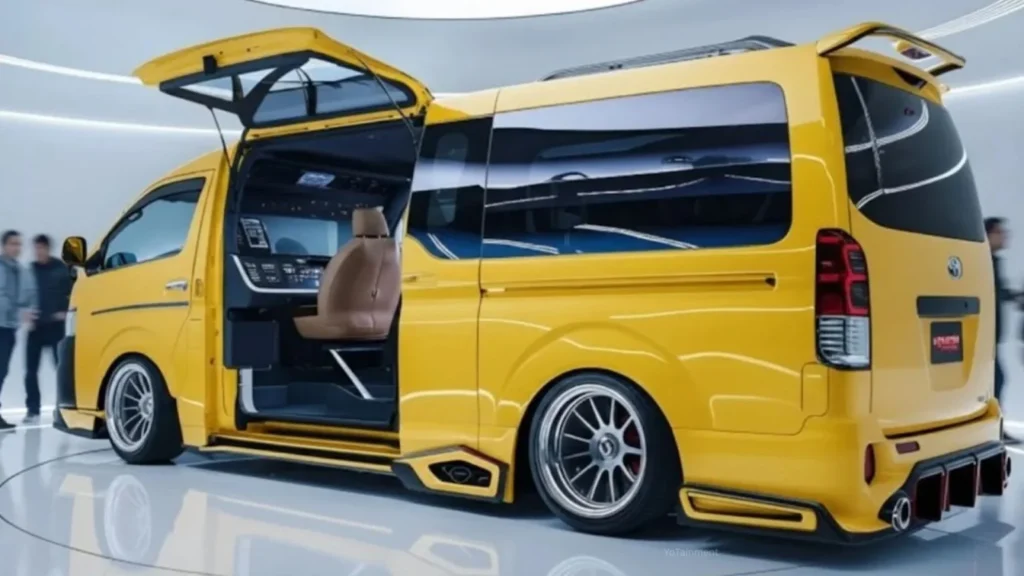
The Toyota Hiace 2026 introduces a refreshed exterior that looks more contemporary while retaining its utilitarian DNA. A redesigned front fascia, updated grille, and sleeker headlamp units give the van a stronger road presence. The changes improve visual appeal for businesses that care about brand image, especially in passenger transport or premium fleet operations.
Toyota also improved aerodynamic efficiency to support better fuel economy and highway stability. The side profile remains clean and practical, offering ample space for branding and fleet graphics. At the rear, wide-opening doors and a low load height simplify cargo operations, particularly in tight urban delivery zones.
Reinforced Structure for Heavy-Duty Use
Toyota strengthened the chassis and body structure in the Toyota Hiace 2026 to handle heavier loads with greater stability. The reinforced framework supports demanding commercial applications without compromising safety or ride balance.
That structural upgrade directly benefits businesses transporting dense cargo or operating in challenging road conditions. Improved rigidity enhances durability, reduces wear, and contributes to longer service life.
Increased Payload and Smarter Cargo Space
More Carrying Capacity, Same Practical Footprint
Payload capacity remains one of the most critical metrics in this segment. The Toyota Hiace 2026 responds with optimized cargo space and improved weight distribution. Businesses can move more goods per trip without significantly increasing the vehicle’s external dimensions.
A flat load floor improves loading efficiency, while strategically positioned tie-down points secure cargo during transit. Whether used for parcel delivery, mobile workshops, or refrigerated transport conversions, the van adapts to multiple use cases with ease.
Versatility Across Industries
The Toyota Hiace 2026 continues to serve diverse industries. Logistics companies benefit from its cargo flexibility, while tourism operators value its passenger configuration potential. Emergency services and specialized service providers also rely on its adaptable platform.
This flexibility ensures that the Hiace remains relevant in markets where business needs shift quickly.
Engine Performance Tuned for Commercial Demands
Under the hood, the Toyota Hiace 2026 focuses on torque delivery and long-term endurance rather than headline-grabbing performance numbers. The engine provides consistent low-end power, essential for carrying heavy loads and navigating stop-and-go traffic.
Power delivery feels smooth and predictable, whether operating in congested cities or cruising on highways. Toyota engineered the powertrain for durability, targeting extended service intervals and reduced mechanical stress over high mileage cycles.
For fleet operators, that translates into fewer disruptions and better cost control.
Driving Stability and Comfort
Despite its commercial focus, the Toyota Hiace 2026 offers a composed driving experience. The suspension system supports heavier payloads while maintaining acceptable ride comfort for drivers and passengers.
Steering prioritizes precision and stability over sportiness, which suits long working hours behind the wheel. Improved braking performance enhances safety, particularly when the van operates near maximum load capacity.
Large mirrors and an expansive windshield improve visibility, helping drivers maneuver confidently in crowded urban areas.
Interior Built for Work
Inside the cabin, practicality dominates. The dashboard layout keeps essential controls within easy reach, reducing distractions during busy schedules. Durable materials withstand frequent use and simplify cleaning, an important factor for high-rotation fleet vehicles.
Driver seating receives improved support to reduce fatigue during extended shifts. While the interior avoids luxury elements, it delivers exactly what commercial operators expect: functionality, comfort, and reliability.
Fuel Efficiency and Cost Management
Fuel costs remain one of the biggest concerns for commercial operators. The Toyota Hiace 2026 addresses this with improved engine efficiency and refined aerodynamics, helping reduce consumption compared to earlier models.
Lower fuel usage combined with Toyota’s reputation for reliability strengthens the overall value proposition. Reduced maintenance frequency and strong resale value further enhance long-term ownership economics.
In competitive fleet bidding environments, these savings can influence procurement decisions significantly.
Safety Enhancements for Modern Fleets
Safety standards continue to evolve globally, and the Toyota Hiace 2026 responds with reinforced body construction and modern driver-assistance features. Anti-lock braking systems, stability control, and other support technologies enhance driver confidence.
These improvements not only protect occupants and cargo but also reduce liability risks for fleet operators. In many markets, better safety ratings can contribute to lower insurance premiums and improved regulatory compliance.
Market Position and Competitive Outlook
The Toyota Hiace 2026 positions itself as a premium yet practical commercial solution. It competes against emerging global vans that emphasize digital features and aggressive styling. However, Toyota’s strategy remains rooted in durability and total cost efficiency.
In a market increasingly shaped by electrification and alternative powertrains, conventional commercial vans must deliver clear economic value. The Hiace continues to do exactly that, especially in regions where infrastructure and operating conditions favor proven combustion platforms.
Industry analysts expect strong demand from small businesses, government fleets, and logistics providers seeking reliable, multi-purpose vehicles.
Conclusion: Built for Business, Ready for the Future
The Toyota Hiace 2026 reinforces its global reputation by focusing on what truly matters to commercial buyers — strength, payload capacity, efficiency, and long-term durability. Rather than chasing trends, Toyota refined its proven formula to meet modern business expectations.
As logistics networks expand and urban delivery demands grow, dependable commercial vans remain essential. The Toyota Hiace 2026 stands prepared to meet those challenges, offering businesses a stable and future-ready foundation for daily operations.